


Are You Paying for IT You No Longer Use?
A Guide for Treasure Coast Business Owners
Managed IT and Cybersecurity for Small Businesses in Port St. Lucie, Fort Pierce, and Stuart, Florida
Most business owners in Port St. Lucie, Stuart, Fort Pierce, and Vero Beach know their rent, their payroll, and their monthly supplier costs. But there is one budget line almost nobody tracks: IT spending on things you own but no longer use. For accountants, law firms, engineering firms, surveyors, architects, and nonprofits across Martin, Saint Lucie, and Indian River Counties, this is one of the most common — and most overlooked — sources of wasted overhead. Forgotten software licenses, idle laptops, and duplicate accounts quietly pull money out of your business every month. And because none of it shows up as a single large charge, it rarely gets noticed until someone actually looks.
Where the Money Actually Goes
The waste tends to fall into three buckets. The first is hardware collecting dust — that old laptop in a desk drawer still holds client data that should have been wiped, and if someone tries to put it back into service, the battery is dead and the operating system is years out of date. The second is software that never got cancelled. You switched project management tools or upgraded your document platform, but did anyone actually cancel the old license? Probably not. The charge keeps hitting the card on file, often going to an email address belonging to someone who left the firm months ago. The third is duplicate accounts across departments. Someone at your firm signs up for a tool, then six months later a colleague signs up for the same tool because they had no idea the first account existed. Research shows that around 50% of software licenses go unused in any given 30-day period — and for smaller firms, the annual loss regularly runs into thousands of dollars.

Why This Keeps Happening
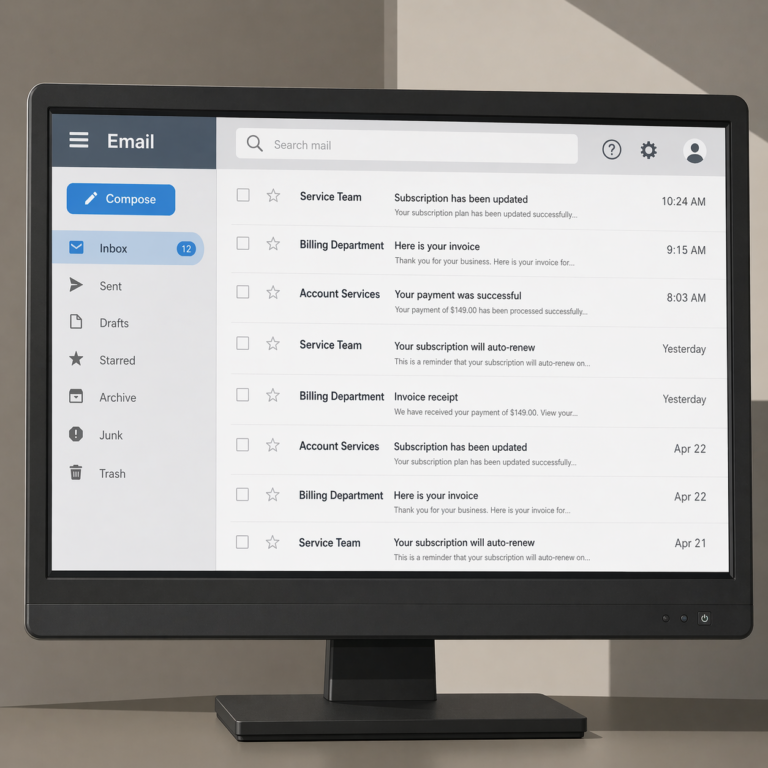
Nobody wakes up thinking they should audit their software licenses today. It is not urgent. It does not bring in revenue or impress clients. So it gets pushed to the bottom of the list and stays there. The charges are small enough that they do not stand out on their own — a $30-per-month subscription feels too minor to investigate. But if you are running ten of those quietly in the background, that is $3,600 a year leaving your business for tools your team is not using. Tools get replaced without anyone cancelling the old one. Contracts auto-renew and the notification goes to a former employee’s inbox. For a nonprofit or a small architecture firm watching overhead carefully, that number matters.
The Security Risk You May Not Have Considered
The wasted money is the obvious problem, but there is a less obvious one sitting right next to it. Old hardware lying around may still contain sensitive client files that were never properly wiped. Accounts tied to former employees — email logins, cloud storage, project tools — remain live entry points into your systems long after those people have moved on. The U.S. Cybersecurity and Infrastructure Security Agency (CISA) specifically advises small businesses to audit and remove former employee access as a core security practice. For professional firms handling client financial data, legal records, or engineering documents, that is not a theoretical risk — it is a real one. A single unmonitored account is enough to create a compliance issue or a breach.


What a Proper IT Audit Uncovers — and What to Do About It
A real IT audit looks at three things: every piece of hardware your firm owns, every software charge on your accounts, and every active user login across your services. It matches licenses to real people, finds accounts tied to former employees, spots duplicate subscriptions across departments, and flags old equipment that still has client data on it. Most businesses find 30–50% more subscriptions than they expected when they do this for the first time. Most business owners start this review on their own and abandon it halfway through because something more pressing comes up. It takes time you probably do not have, and it requires knowing the right questions to ask vendors. At Treasure Coast IT Solutions, we run IT audits regularly for accountants, attorneys, engineers, surveyors, architects, and nonprofits across the Treasure Coast — and we know exactly where to look. If you have not reviewed your IT spending in the past year, give us a call at (772) 335-2262 or schedule a free consultation below and we will find out what you are paying for that you no longer need
Schedule A Free Consultation
Are you in need of Complete Business Technology Management and Support and unsure what it will cost?
We have you covered. We provide prospective customers a FREE initial consultation which will help us to get to know what your organization needs and what you don’t!
Schedule your free consultation today!
Frequently Asked Questions
What does an IT audit find for a small business?
A proper IT audit covers hardware inventory, software license reconciliation, and account management. It identifies idle equipment, cancelled-but-still-billing software, duplicate subscriptions across departments, and active accounts belonging to former employees — all of which represent avoidable cost and security risk.
How much money do small businesses waste on unused software licenses?
Research shows that around 50% of software licenses go unused in any given 30-day period. For a firm paying $500 per month across various tools, that can mean $3,000 or more leaving the business annually for software nobody opens.
Why is an old employee’s account a security risk?
When an employee leaves and their accounts are not deactivated, those credentials remain active entry points into your systems. CISA specifically advises businesses to remove former employee access as a core security practice to reduce the risk of unauthorized access and data breaches.
